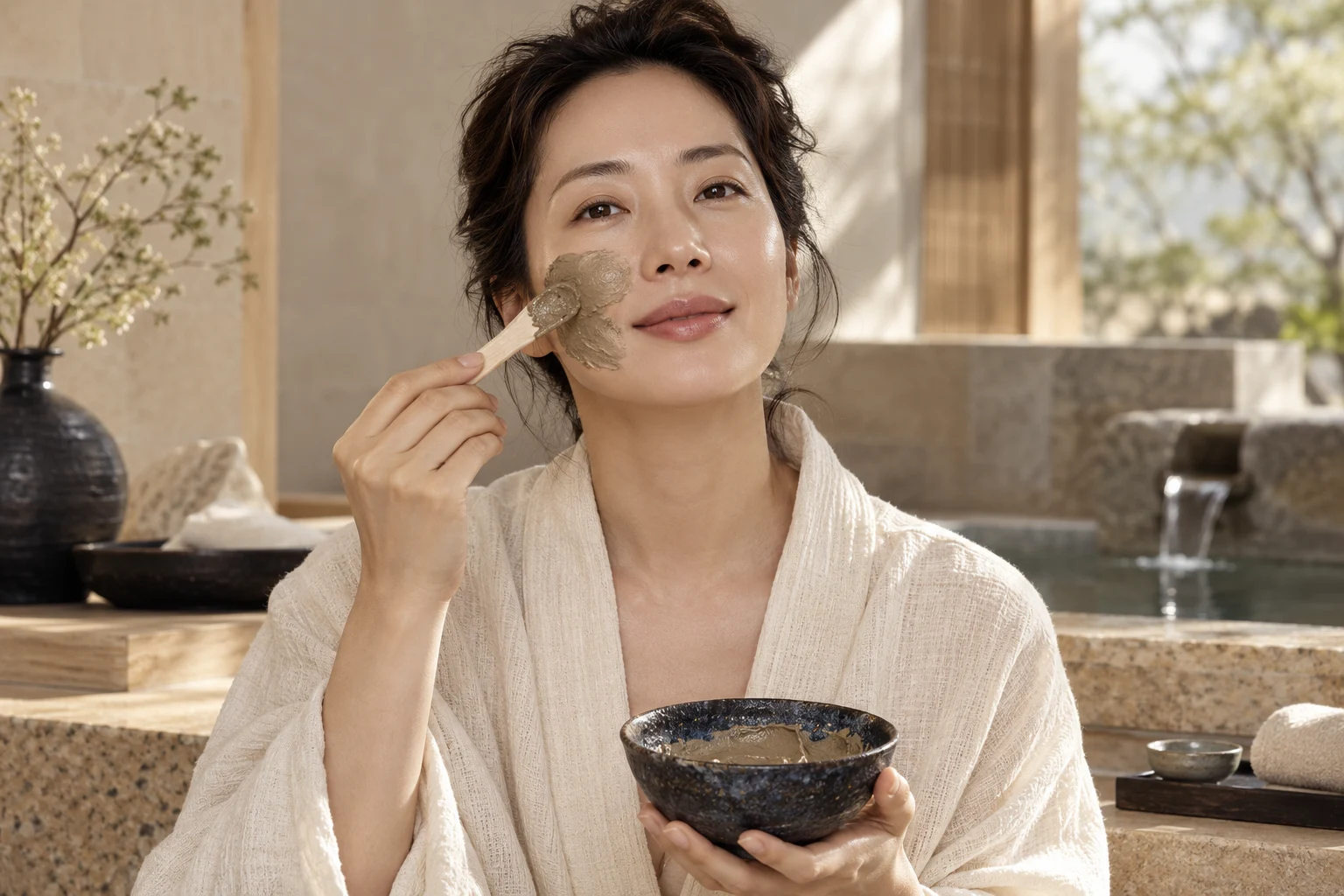
The wash-off mask is the oldest format and the one people most often use wrongly, because the instructions vary more than anyone expects and almost nobody reads them twice.
Many Korean wash-off masks are formulated to stay creamier than a traditional drying clay mask, often combining clays or powders with humectants and soothing ingredients. The useful distinction is not national origin but the specific formula and its directions: some are designed to dry more than others.
Contact time matters because a clay-rich mask that dries hard can feel progressively tighter or drier. Leaving it on longer than the maker recommends does not make it more effective, so the product instructions are a better guide than waiting for cracks.
The four kinds, and what each is for
Clay absorbs surface oil and helps lift surface debris during rinsing. Contact time varies by formula, and clay is the category most likely to feel drying when overused.
Rice can contribute texture, conditioning or gentle physical polishing depending on how the formula is built. A rice mask is not automatically an exfoliant or brightening treatment simply because rice appears on the label.
Mugwort is often used in formulas positioned for comfort and soothing. The plant has interesting mechanistic research, but the finished mask should still be judged by its complete formula and directions.
Honey often appears in richer, humectant or emollient wash-off formulas aimed at a cushioned finish rather than oil absorption. Texture and supporting ingredients determine the result.
Getting it right
Read the time on the specific product. Two masks that look identical in the jar can want five minutes and twenty minutes respectively, and using one at the other's timing wastes it or overdoes it.
Apply the amount the product specifies. Too little or too much can change drying time and removal, so there is no universal rule that thicker is better.
Damp skin for clay, dry skin for most others, unless the product says otherwise.
Rinse with lukewarm water, not hot. Hot water undoes the soothing you just paid for.
Use frequency should follow the product directions and your skin's response. Wash-off masks are an optional treatment step, not something that needs a universal weekly quota.
In the cabinet
Beauty of Joseon Ground Rice and Honey Glow Mask. Rice hull, makgeolli rice wine complex, honey and kaolin. Fifteen to twenty minutes.
Beauty of Joseon Red Bean Refreshing Pore Mask. Red bean and kaolin, a cooling mud rather than a drying clay. Five to ten minutes. Note the difference from the one above: they are not interchangeable and this is exactly the trap.
Mary&May Blackberry Complex Glow Wash Off Pack. Three clays plus blackberry and almond shell powder, so it exfoliates while it draws. Ten to fifteen minutes.
I'm From Mugwort Mask. The calming one, for skin that is reacting.
I'm From Honey Mask. Thick, balm-textured, for dryness.
Anua Heartleaf Pore Clay Pack. Heartleaf, the other great Korean calming plant, in a clay base.